
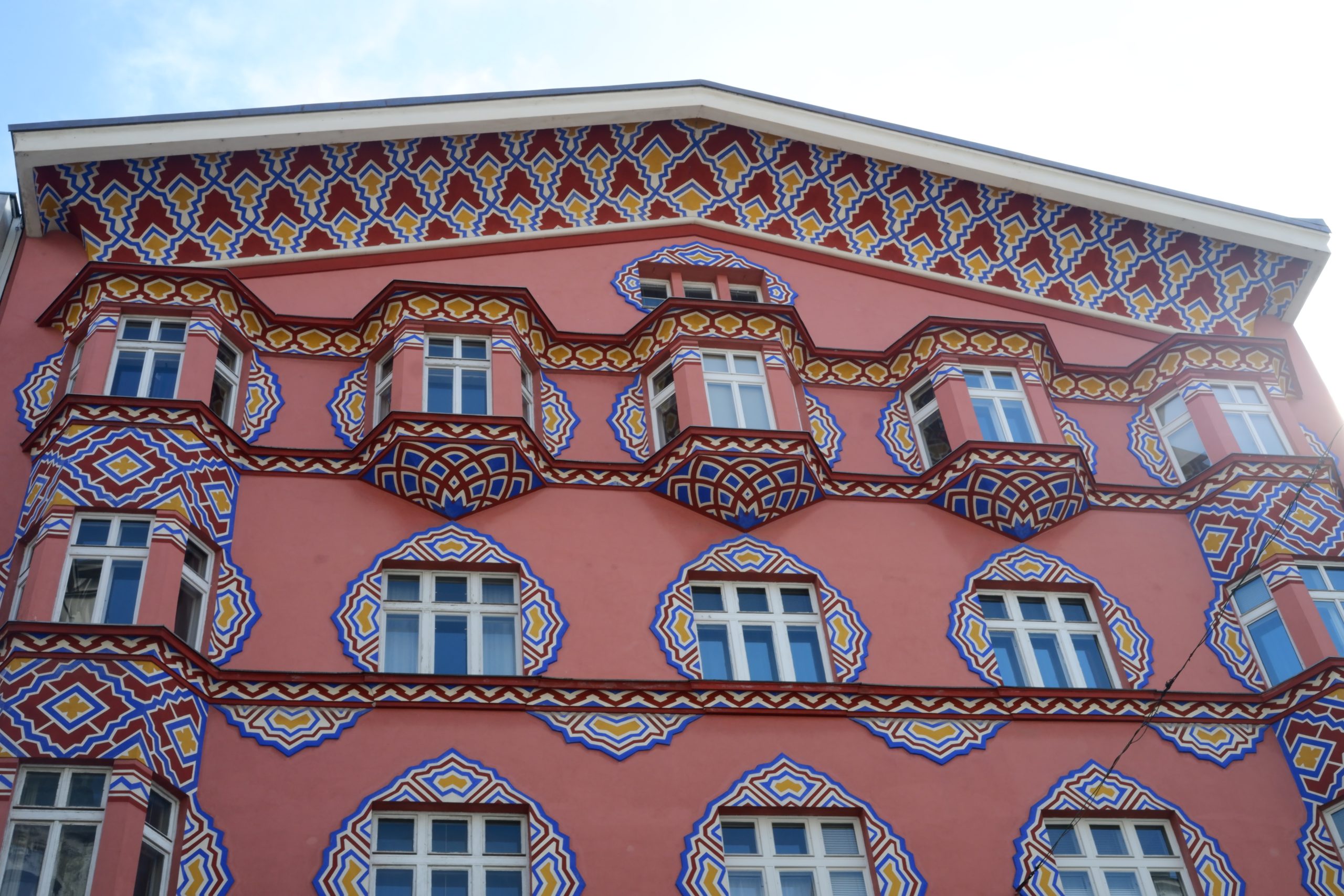
Vurnik House, an old bank building completed in 1921 in an iconic and unique architectural style, representative of Slovenia. The red, white and blue geometric patterns mimic the Slovenian flag, and the house features Slovenian motifs including spruce forests, wheat fields, and vines.
Slovenia was a surprising one for me. I don’t exactly know what I expected, but it was probably along the lines of small villages scattered about a beautiful mountainous countryside, where the locals spoke broken English and there were lots of bears. Maybe I’m crazy, or maybe some of this holds true in other parts of Slovenia, but in the country’s capital, Ljubljana, I couldn’t have been more wrong.
For starters, I saw ZERO bears! But also, I was shocked at how perfectly everyone spoke English. This was true without exception, and with a barely perceptible accent at that. I suppose that bilingualism is a silver lining of being one of the smallest EU economies.
Ljubljana is a city with about the population of Wellington, nestled in a valley and straddling the appropriately named Ljubljanica River. Like any good European city, an 11th-century fortress sits atop a hill in the centre, providing great views and a postcard image. And like any good castle, this one has a dragon. Or had, anyway. Legend has it that the Greek hero Jason and his Argonauts, escaping with a stolen Golden Fleece, sailed across the Black Sea and up the Danube until they reached the Ljubljanica, where they dismantled their ship and carried it across land to the Adriatic coast. On the way, they trudged through the marshes near the source of the Ljubljanica and stumbled across a large lake. A dragon lived here, which, of course, the hero fought and defeated.
We know that Ljubljana was built on the site of a large lake, and archaeological evidence of stilted huts tells us that this place was surrounded by a marsh too. I’m not sure about the dragon part, but at least it’s something cool to put on a keyring.
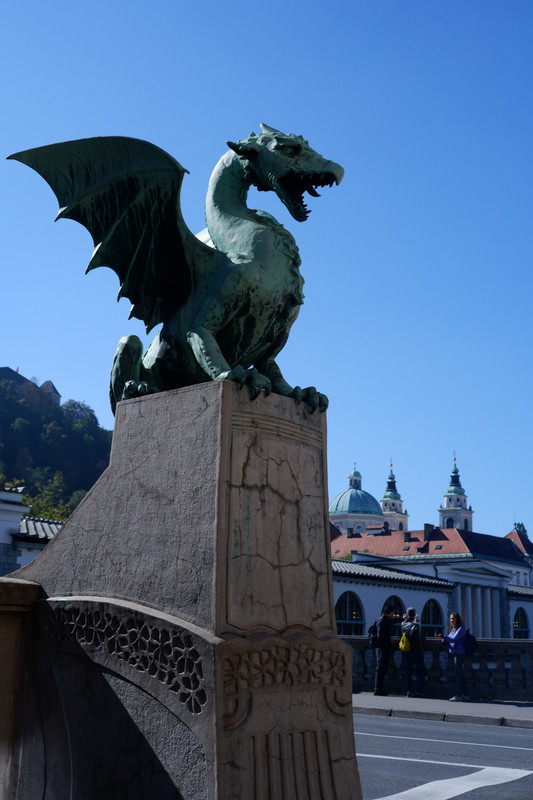
Finn and I really liked Ljubljana’s atmosphere. It was busy and a bit cold, sure, but it still felt laid-back and inviting. The river was lined with cafés and restaurants with fairy lights and heaters. The cobbled streets of the old town were clean and car-free. And the architecture? Well, that was my favourite part.
Walking around the streets of Ljubljana, we were surrounded by the incredible swirls, vines, flower motifs and asymmetrical qualities characteristic of early 20th-century Art Nouveau style. We saw curved façades, wrought-iron balconies shaped into flowing plants, stained-glass windows, and female figureheads. Basically, if you can imagine a fairy living in a building, it’s probably Art Nouveau. And it’s one of my favourite movements in art and architecture.
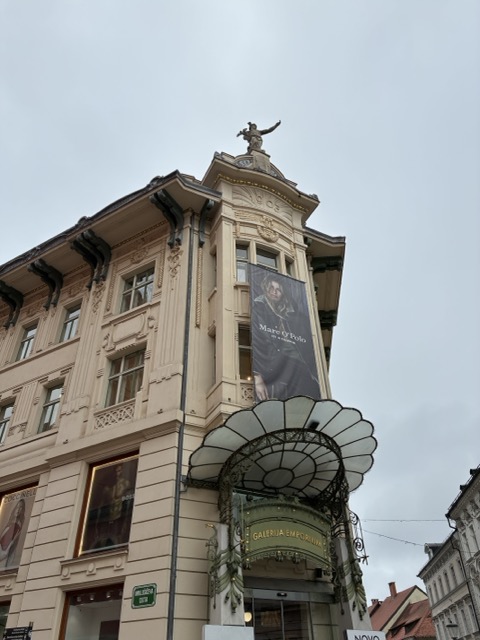
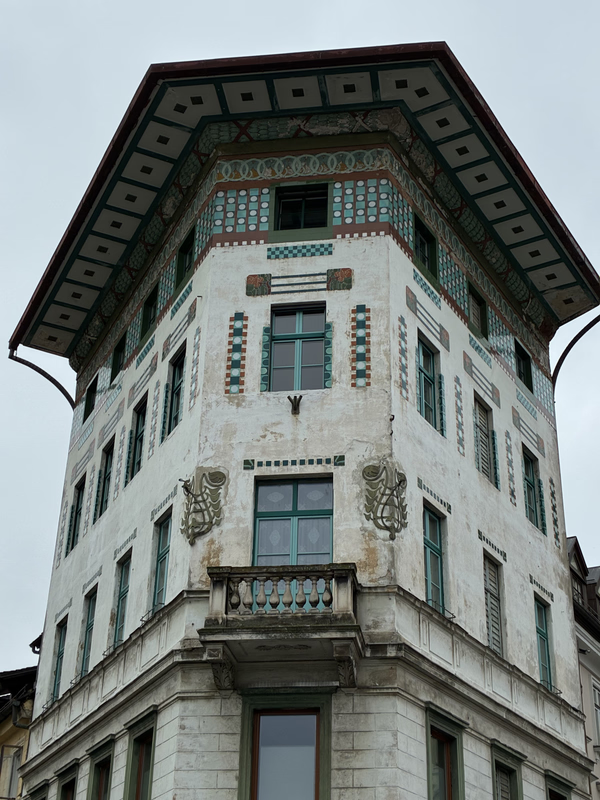
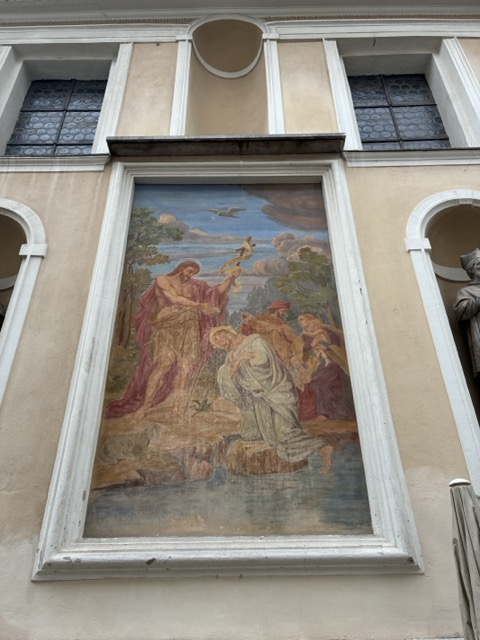
Some of the Art Nouveau icons of Ljubliana
Turns out that provincial image of Ljubljana I had imagined was more accurate before WWI, when the city was no more than a large village. In 1895 an earthquake destroyed many buildings, leaving a void of potential for building something more. All it took was the work of one man to transform the built environment and reshape Ljubljana into a real capital city – an epicentre deserving of leadership, innovation and international legitimacy.
This man, Jože Plečnik (pronounced yo-zhe plech-nik), is a legend in Slovenia. He started as a woodworker in Ljubljana, but quickly transitioned to architecture, studying and working under renowned Viennese architect Otto Wagner. Before he even got to designing the public spaces of Ljubljana, Plečnik had worked as chief architect improving Prague Castle, the biggest project of his life, which took 15 years to complete. So it’s safe to say he was pretty qualified by the time his focus shifted to his hometown. In 1921 Plečnik became a founding member of the Ljubljana School of Architecture and basically had free rein to redesign the city.

Remember Plečnik’s old professor and employer, Otto Wagner? Well, he was super influential in the foundation of a new movement called the Vienna Secession. Other artists like Gustav Klimt (you might know him from his golden painting The Kiss) contributed as well. Essentially, in the late 1800s, Vienna was the place to be. And Plečnik brought Vienna to Ljubljana. But he started his Ljubljana project a decade or so after the Vienna Secession was at its height, so Plečnik took this inspiration and modernised it, resulting in work that combines the modern vision of clean lines and geometric patterns with an intricate, nature-inspired form of ornamentation.
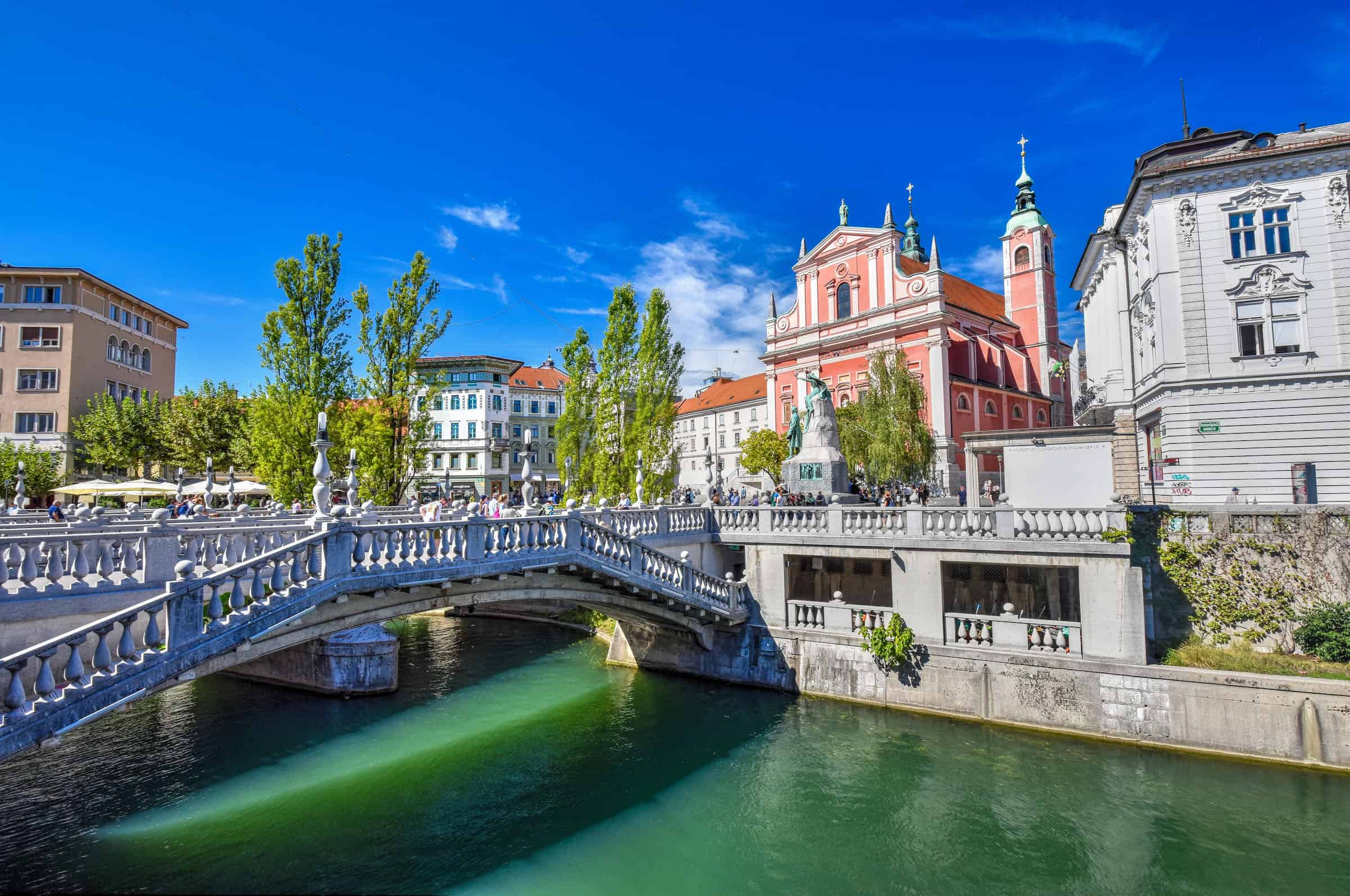
Plečnik’s designs were also influenced by other European countries, in an effort to assert Ljubljana as a romantic city defined by its (albeit minimal) position on the Mediterranean. So much of his work draws from Greek and Italian design principles. For example, the iconic Triple Bridge, located right next to the town square. Designed before the old town turned car-free, this bridge has one big area for cars and two smaller bridges – one for cyclists and one for pedestrians – at slight angles. It conjures the aesthetics of Venice, specifically inspired by the famous Rialto Bridge (you can see this especially in the balustrade columns).
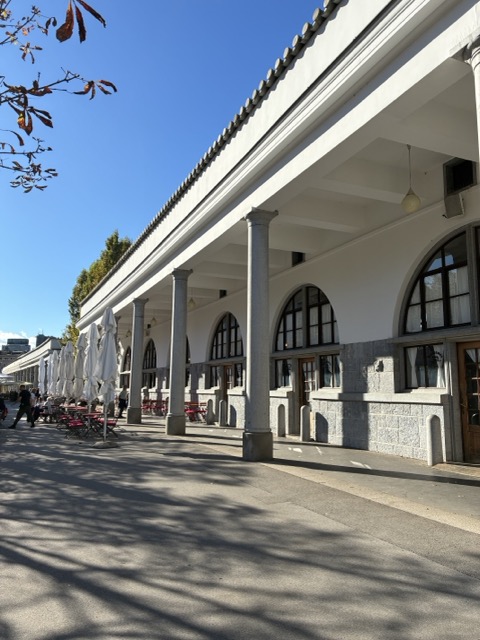
Plečnik was also heavily inspired by Ancient Greek architecture, and he is said to have sought to make Ljubljana a “new Athens”. He was able to design all the spaces needed to create an Ancient Greek city: a stadium, cemetery (necropolis), market square, covered walkway (stoa), meeting square (agora), and a mountain temple (acropolis). The covered walkway/market is a clear illustration of how Plečnik wanted to reflect the romance of Athens, with very Greek-looking columns blended with local Slovenian building materials. The practicality of a beautiful all-weather walkway – where people actually want to visit, catch up and shop – highlights Plečnik’s people-centred and historically informed approach to urban design.
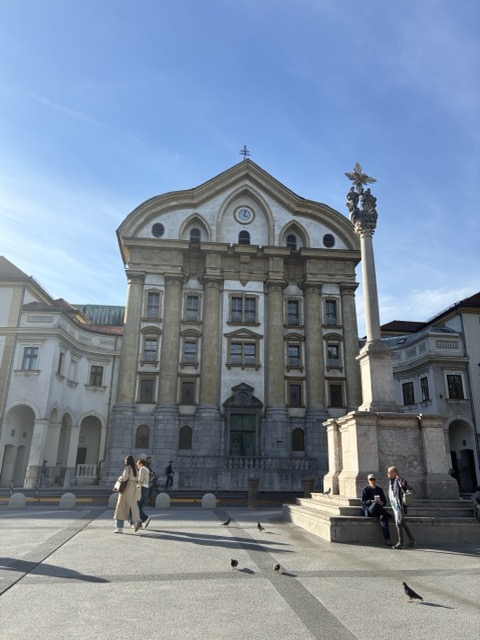
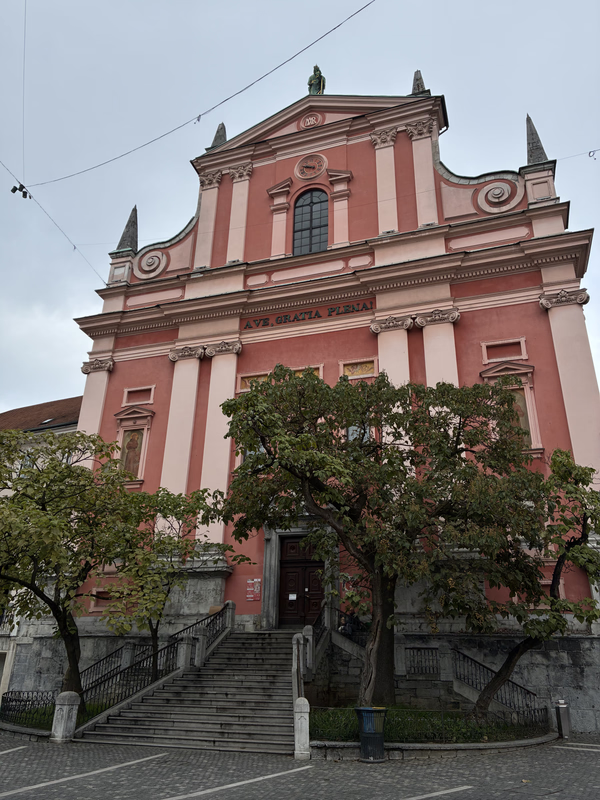
His constellation of works around Ljubljana is so profoundly influential that they were admitted to the UNESCO World Heritage List in 2021. By designing a series of public institutions and weaving them into the existing environmental fabric, Plečnik defined Slovenian national identity on an international stage. This remains incredibly important due to the complex relationship Slovenia has with its own identity.
Now, bear with me while I turn to history for a moment. When you look back on the Slovenian past, the nation has fallen under just about every major European empire. Notably, its people were ruled by the Romans, Germans, Austro-Hungarians, Venetians, French and Russians. So they’ve had a lot of influence (read: repression) from external cultures. Our tour guide summed this up well when she told us that her grandfather had gained “five different nationalities”, despite never leaving the small town he grew up in. Born before World War One, he had Austrian citizenship. After the war, the Austro-Hungarian Empire dissolved, and they became part of the Kingdom of Yugoslavia. During the Second World War, his area was annexed by Fascist Italy, so he was labelled Italian. After the war, they became a semi-independent communist republic, part of the Socialist Federal Republic of Yugoslavia. So all of this before he finally achieved what he considered his “true” citizenship when Slovenia became fully independent in 1991. I’m sceptical of the authenticity of this story, but the principle is true nevertheless.
So, since Slovenia is a recently minted independent nation, you can see how much it means to have a capital city that is beautiful and unique. By looking like it belongs among other great European capitals, like Berlin, Vienna, Athens or Rome, the city serves to reinforce Slovenian sovereignty and its position on the global stage. But aside from appealing to European aesthetics, Plečnik also succeeded in retaining a core Slovenian uniqueness in all his creations. For many Slovenians, this unique style is a way of saying, “Look, compatriots. This is who we are. This is what it means to be Slovenian.”
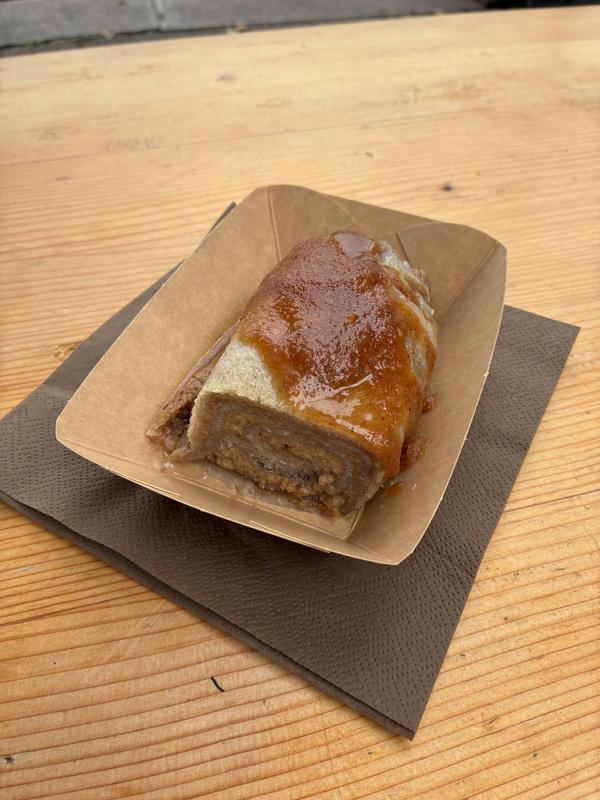
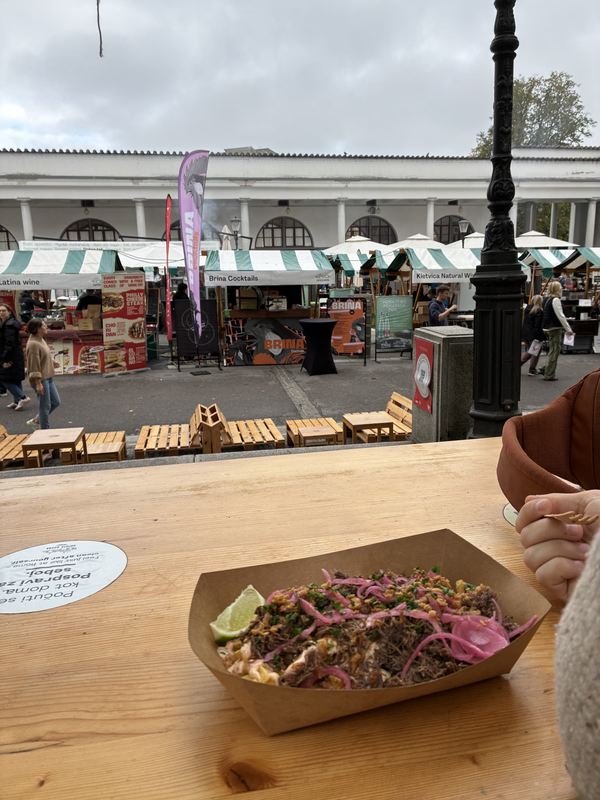
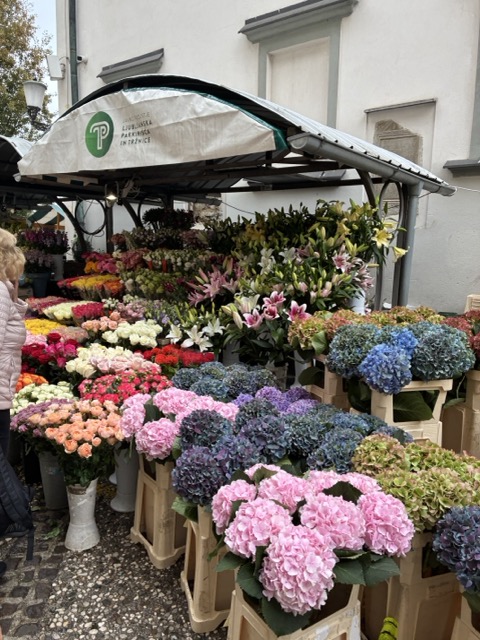
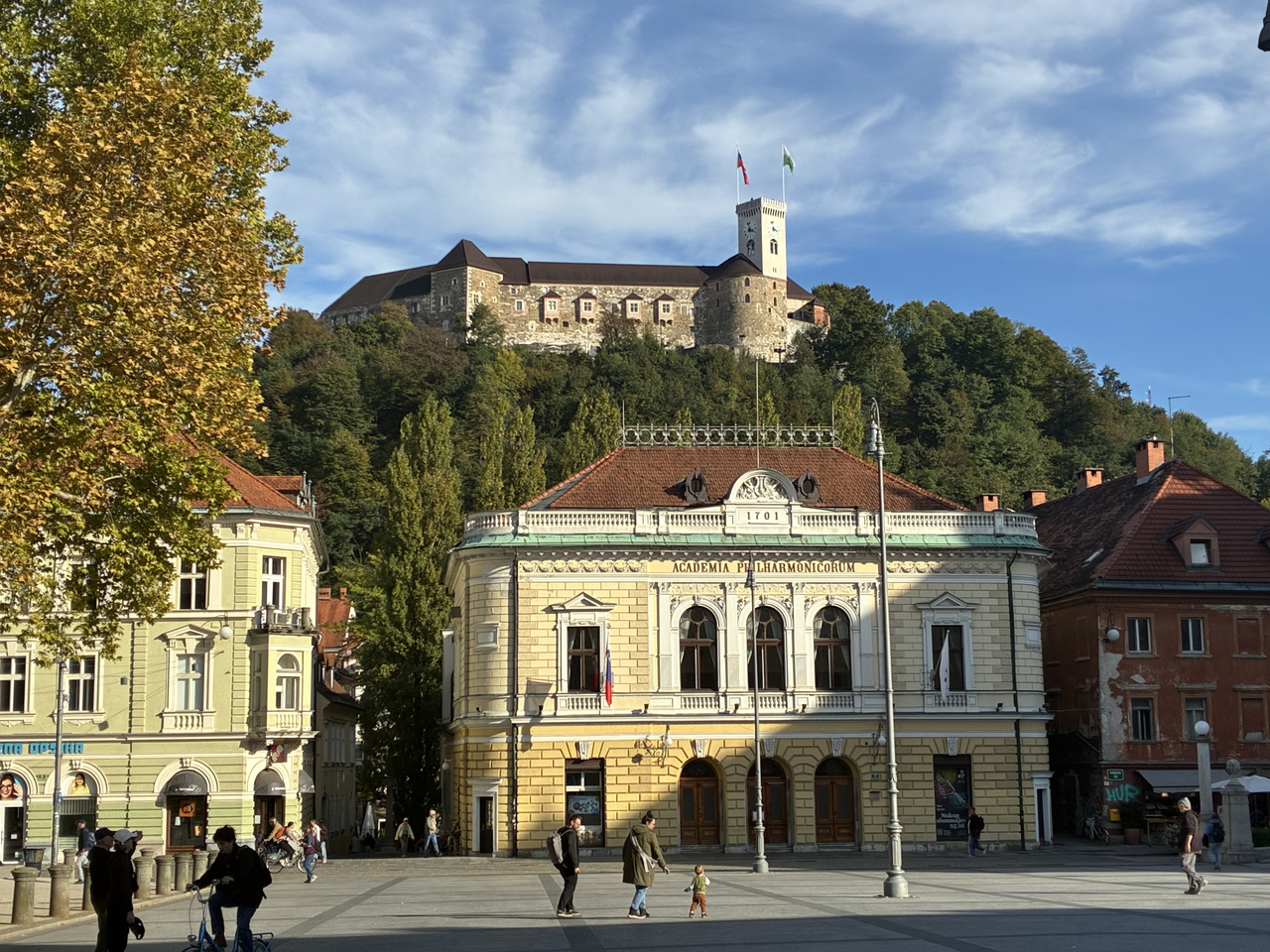
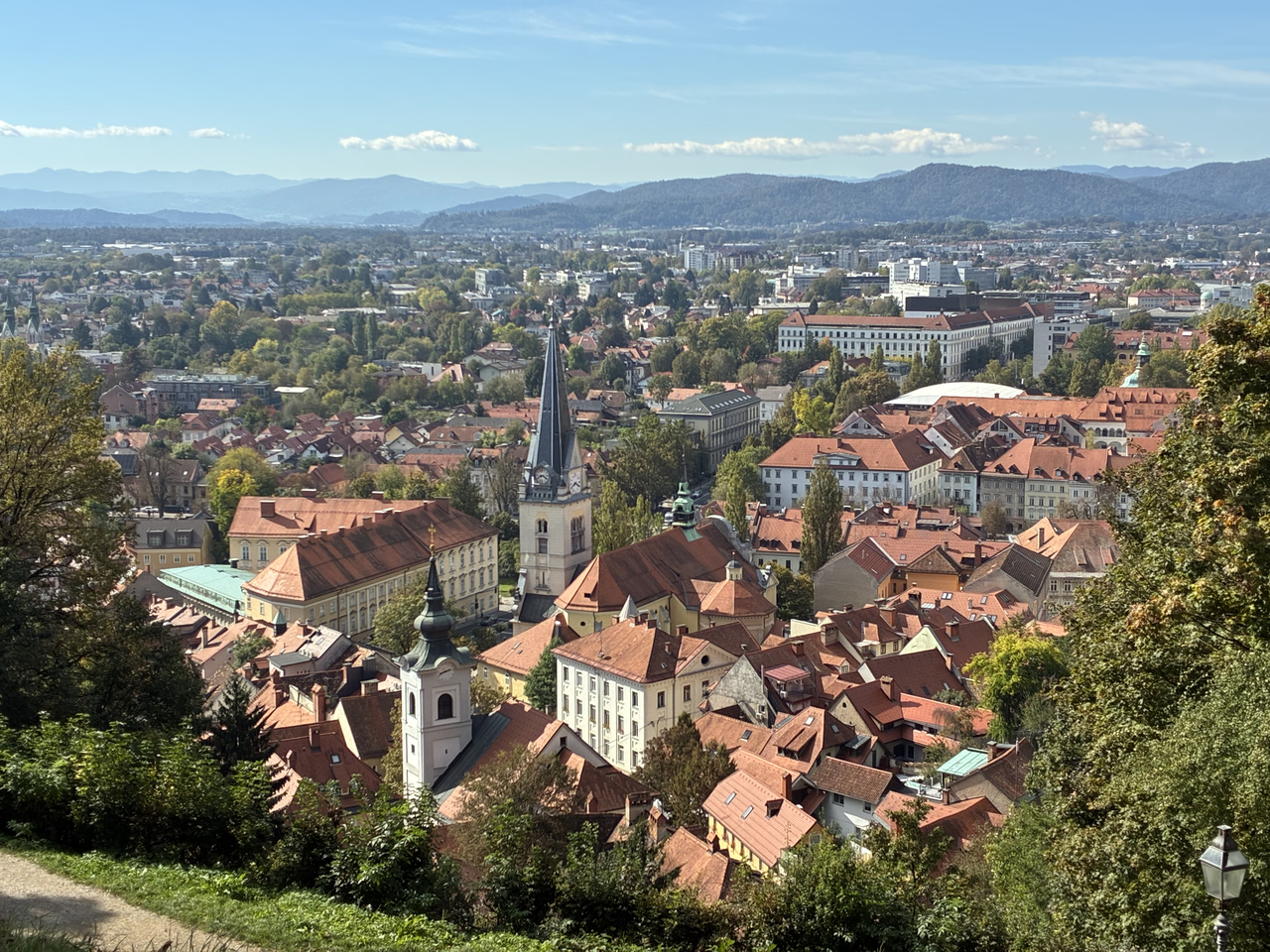
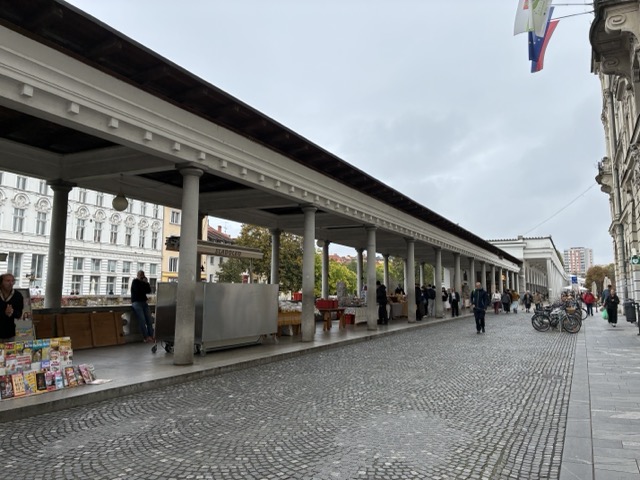
So it’s no wonder Plečnik is considered a national hero. He achieved the incredible feat of transforming his home village into an impressive yet people-focused capital city, blending classical European styles with Slovenian character to give the city both beauty and identity. Wandering around, it’s easy to see why locals are so proud of him – the city feels personal, like it was built for people rather than just to impress them. So if you ever find yourself in Ljubljana, grab a coffee by the river, cross a few of Plečnik’s bridges, and just take it all in. The guy really knew what he was doing.
Signing off,
Milly
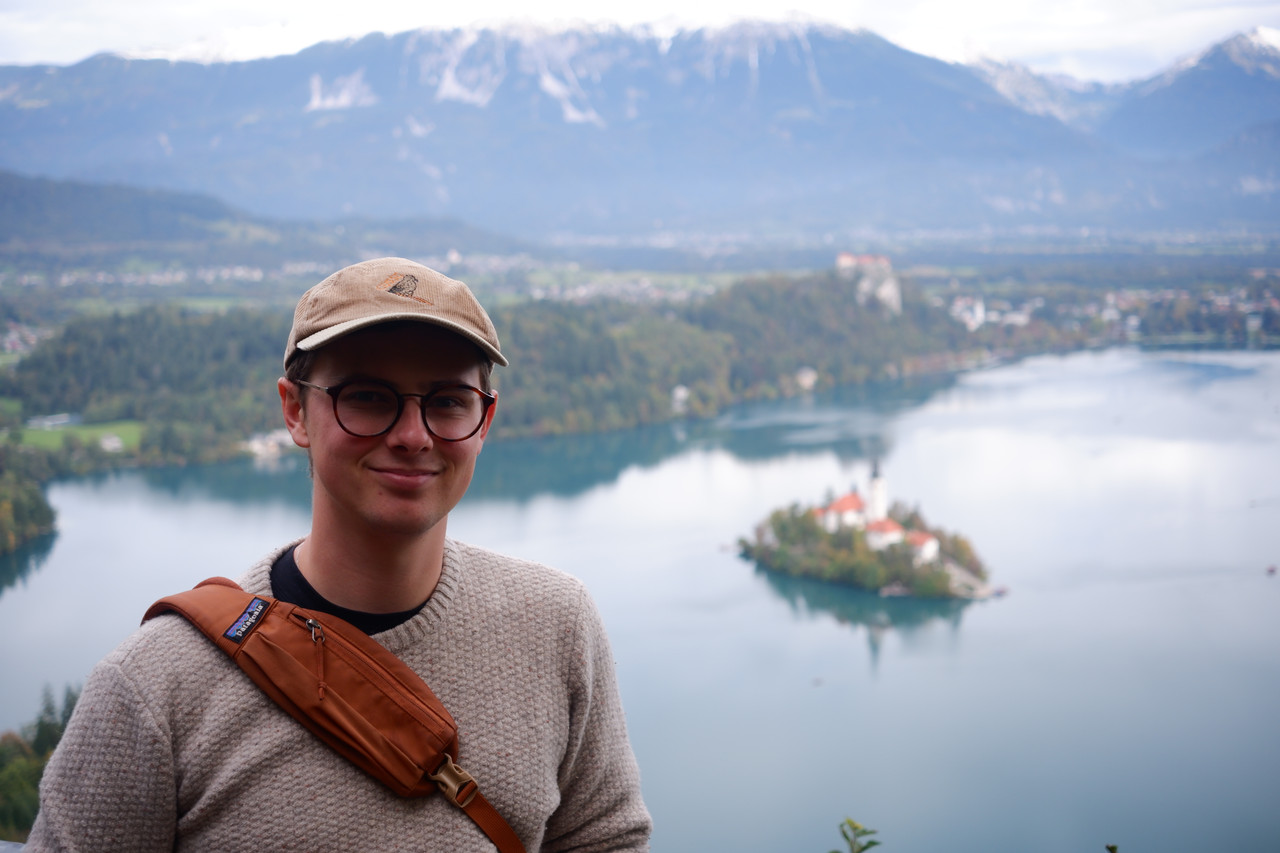
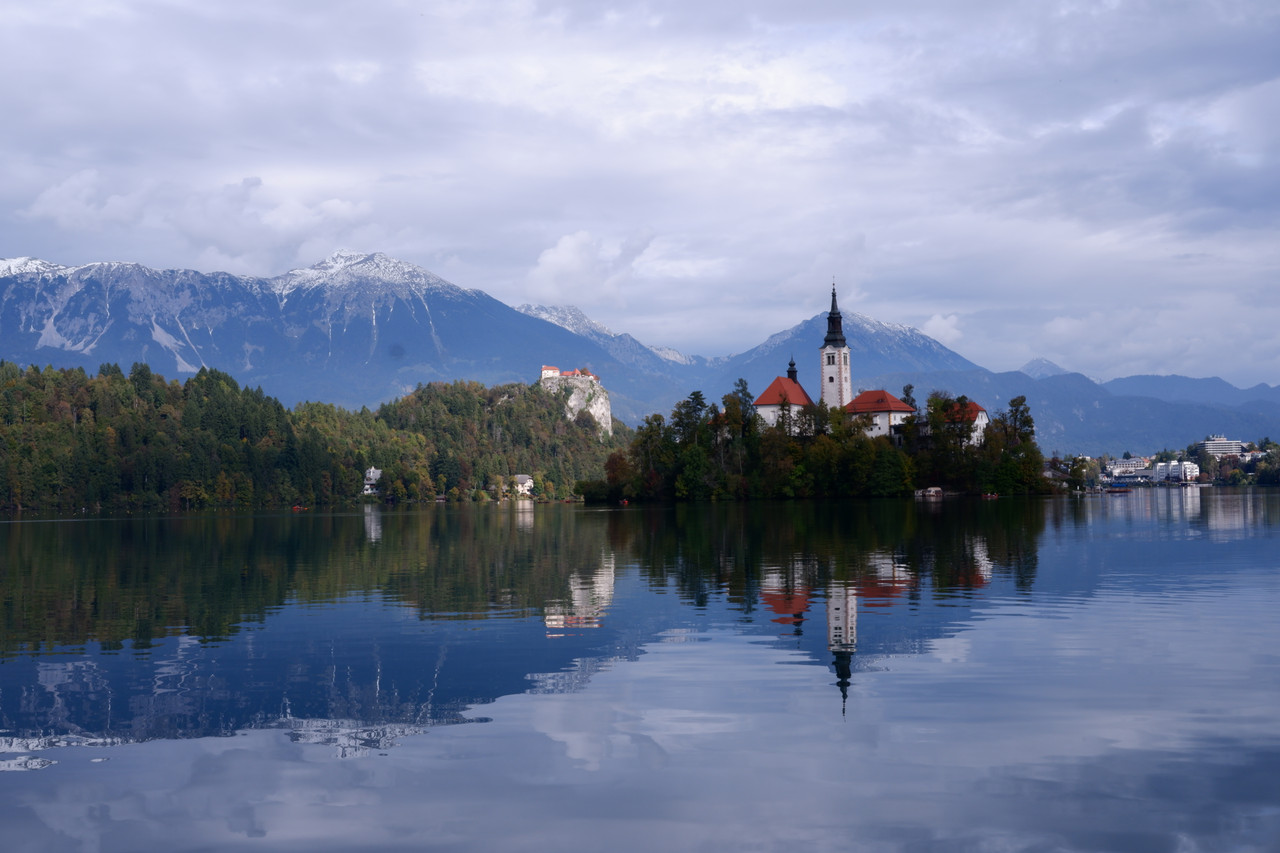
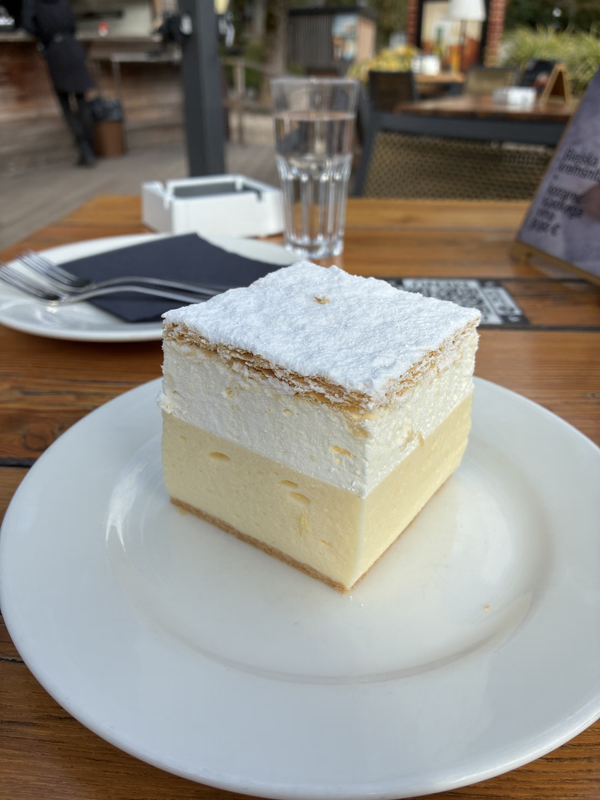
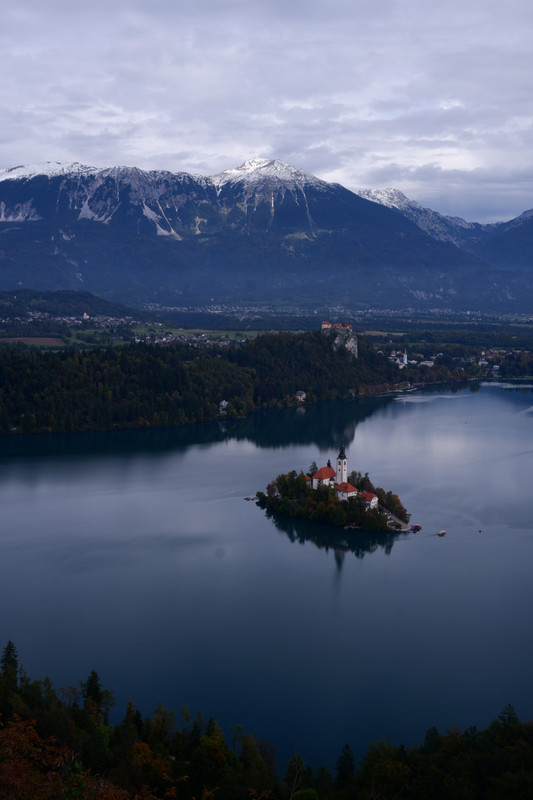
p.s. we also went to Lake Bled, about an hour from Ljubljana, and tried the Bled Cream Cake (which was literally just a custard square)